


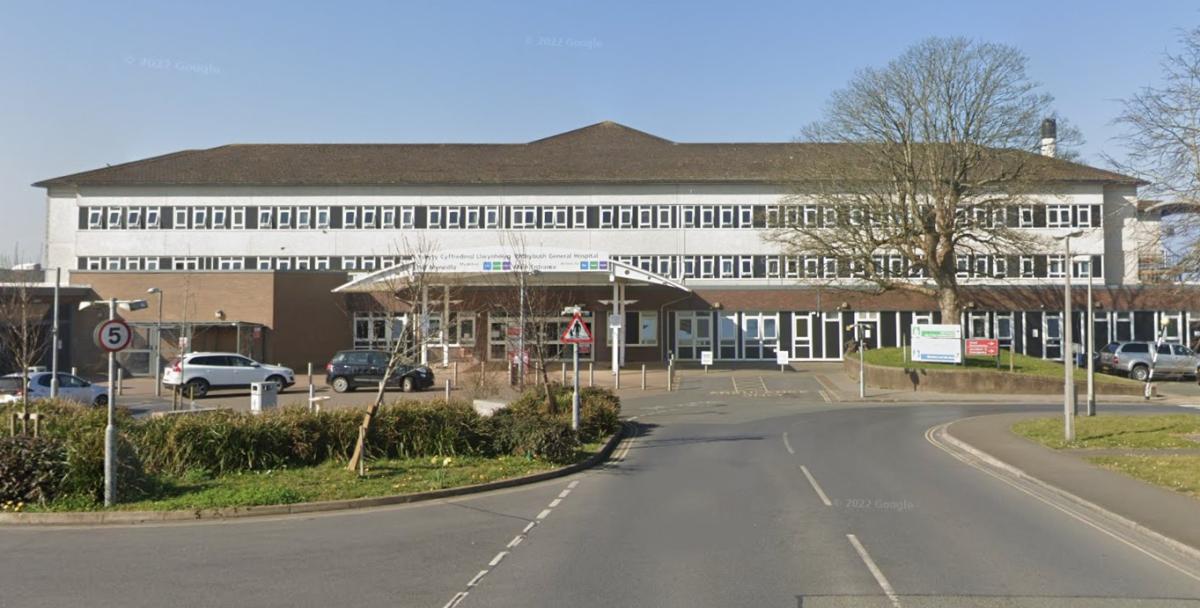


A Pembrokeshire coroner has found that Withybush Hospital’s treatment of a seriously unwell woman, who had Parkinson’s and Down’s syndrome, did not cause her death.
Jacqueline Kay Walker, 49, was admitted to A&E at Withybush Hospital on January 1, 2022, with lethargy, fever, loss of appetite and poor food and drink intake.
She had pre-existing medical conditions including swallowing difficulties, recurrent respiratory problems, severe frailty and metastatic malignant melanoma involving the lungs.

At Withybush she was diagnosed with urosepsis and given antibiotics and oxygen.
It was also noted that her swallowing was impaired and she had a weak cough and congestion on her chest.
During her stay in hospital she developed aspiration pneumonia.
She was seen by the chest physiotherapist and a speech and language therapist but was too unwell to undertake a swallowing assessment.
By January 8 she had suffered a significant aspiration event, when food, liquid, saliva or stomach contents entered the airway or lungs, causing brain injury.
Why do newspapers cover inquests and how do they work?
Discussions were held about whether to transfer her to the hospital’s critical care unit, but more invasive care was not deemed suitable as the risk of harm outweighed the benefits and priority was given to maintaining her comfort and dignity.
An inquest held on November 26 heard that, on admission to Withybush, Jacqueline’s usual Parkinson’s medication was replaced with a dermal patch but the dose was halved without a recorded clinical explanation.
The inquest heard that the doctor who had changed the prescription was a locum and had not been able to be contacted by the coroner to give evidence.

An anti-emetic for sickness had also been prescribed to be taken on an ‘as and when basis’.
Expert witness Dr Ross told the hearing that the reduction in the Parkinson’s medication and lack of a regular anti-emetic probably did contribute to the aspiration event that led to Jacqueline’s death.
However, he added that Jacqueline was very frail and had an irreversible degenerative disease.
He said that her prognosis was poor and that the outcome was unlikely to have been different.
“If things had been done a bit differently she might have survived a bit longer,” he said, “But the chance of her making a recovery to the Jacqueline that she once was was very low. In not making a full recovery she would have suffered more.”
Dr Ross told Jacqueline’s family that he would never forget her.
After considering all the evidence Pembrokeshire Coroner, Gareth Lewis, found that the treatment Jacqueline had received in Withybush had been appropriate.
He had earlier noted that the hospital had recently moved to electronic prescribing which had a better system of checks and accountability.
The hospital also now had a learning difficulties liaison team which advocated for patients with learning difficulties.
He said that Jacqueline had particular susceptibility to aspiration due to her existing health conditions.
The coroner said he was not satisfied that the reduction in Parkinson’s medication caused or materially contributed to the aspiration event that led to her death nor that an anti-emetic would have prevented the aspiration event.
He said that he was not satisfied that other interventions by the speech and language therapy team or alternative physiotherapy would have changed the outcome.
“While aspects of Jacqueline’s care may reasonably be open to criticism, I am not satisfied on the balance of probabilities that any identified act or omission caused, accelerated or more than minimally contributed to her death,” said Mr Lewis.
The coroner recorded that Jacqueline died from aspiration pneumonia and consequent anoxic brain injury which developed during treatment for E. coli urosepsis.
He concluded that Jacqueline died from natural causes and expressed his sincere condolences to her family.
“It was clear that she was dearly loved and blessed with a family that cared for her with love and dedication,” he said.
“May she rest in peace.”


Share